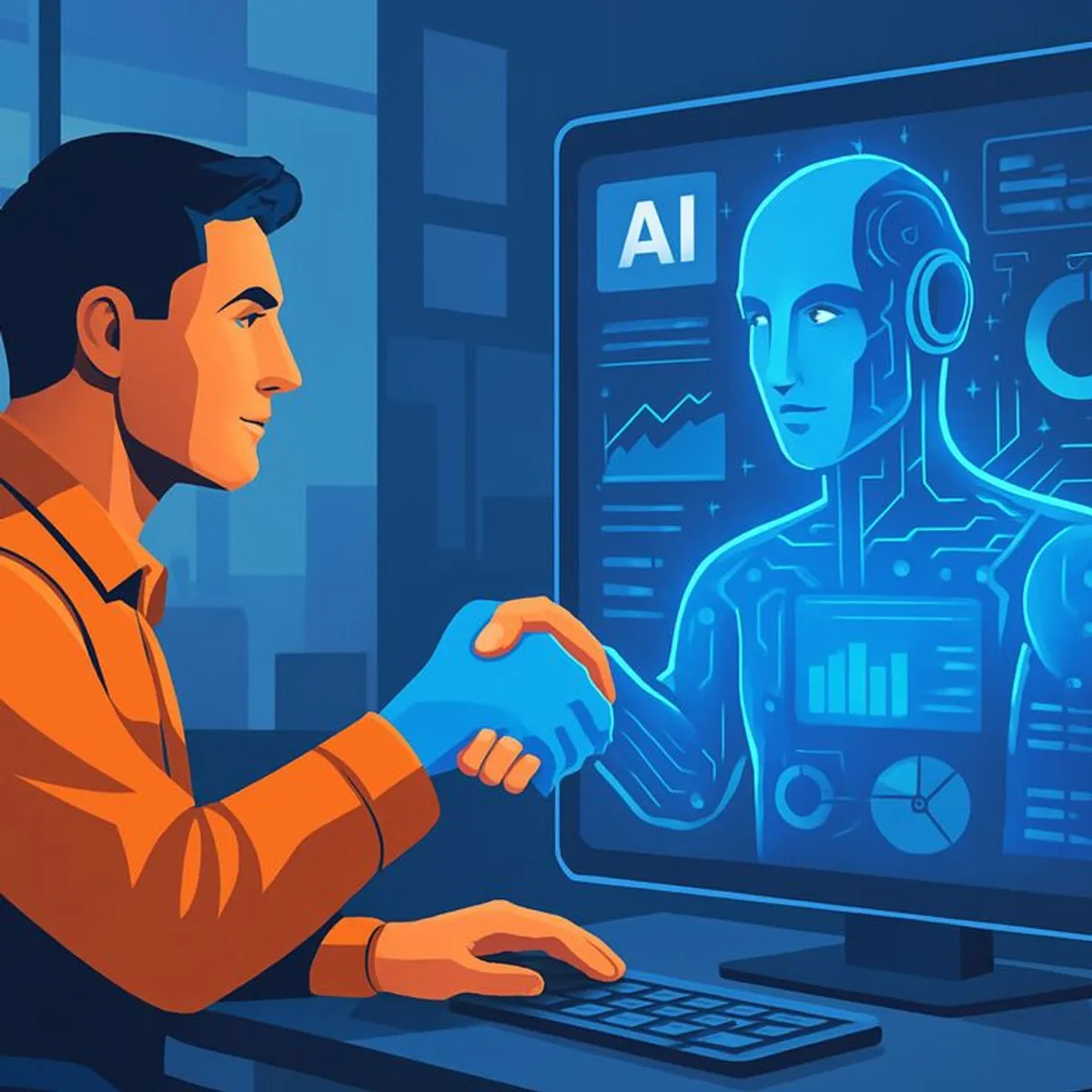
AI Workplace Tools in 2026: How They're Actually Changing How We Work
The AI revolution isn’t just about chatbots anymore – it’s fundamentally changing how we work. As a technologist who’s been tracking this evolution, I’ve seen how AI workplace tools have moved beyond the hype to deliver measurable productivity gains. Let’s dive into how these tools are reshaping our daily work lives and what it means for the future of productivity.
The New AI-Powered Workspace
Remember when “AI integration” meant clunky chatbots that barely understood your requests? Those days are gone. Today’s AI workplace tools are seamlessly embedded into our existing workflows through platforms like Microsoft 365 Copilot and Google’s Gemini for Workspace. These aren’t separate tools you need to context-switch to, they’re native extensions of the applications you already use.
For instance, Copilot can draft an entire project brief in Word based on scattered Teams messages and SharePoint documents, while Notion AI can instantly summarize a 20-page document or generate meeting notes from a simple prompt. The key difference is context awareness: these tools understand your organization’s data, terminology, and workflows.
Real Productivity Gains (Not Just Promises)
The impact is quantifiable. Research across 5 million+ meetings shows that teams using AI assistants like Fireflies.ai or Read AI are saving several hours per week through:
- Automated meeting transcription and summarization
- Action item extraction and assignment
- Searchable knowledge bases that eliminate “what did we decide last time?” questions
- Seamless handling of missed meetings through AI-generated summaries
But perhaps more interesting is how these tools are changing work patterns. Teams are shifting collaborative work to mid-week, using AI to protect focus time on Mondays and Fridays. New hires are ramping up faster by accessing AI-searchable archives of past decisions and discussions.
The Rise of AI Agents and Automation
One of the most exciting developments is the emergence of agentic systems – AI tools that can handle multi-step workflows autonomously. Zapier’s AI agents, for example, can now:
# Example of a Zapier AI agent workflow
if new_lead_detected:
    analyze_lead_data()
    create_personalized_outreach()
    schedule_follow_up()
    notify_sales_team()
These aren’t just simple if-then automations anymore. They can understand natural language instructions like “Track new Twitter mentions of our product, analyze sentiment, and send weekly summaries to Slack” and build the entire workflow automatically.
Challenges and Limitations
Despite the impressive capabilities, we need to be clear-eyed about the challenges:
-
Data Security: These tools process sensitive business information. Organizations need robust security policies and compliance checks before adoption.
-
Accuracy Concerns: While dramatically improved, AI can still hallucinate or make mistakes. Critical decisions still require human oversight.
-
Integration Complexity: The most value comes from tools deeply integrated with existing systems, which can require significant IT resources to implement properly.
-
ROI Measurement: Organizations need clear metrics to measure impact, beyond just user satisfaction.
Looking Ahead: 2026 and Beyond
By late 2026, expect to see:
- More autonomous “AI teammates” handling end-to-end workflows
- Deeper integration of voice and multimodal interactions
- AI tools grounded in company-specific data to reduce errors
- Purpose-built solutions for specific industries and workflows
The most successful implementations will be those that focus on specific pain points rather than trying to “AI-ify” everything. The goal isn’t to replace human workers but to augment their capabilities and free them from routine cognitive overhead.
My Take
As someone who works with these tools daily, I’m convinced we’re at an inflection point. The productivity gains are real, but they’re not evenly distributed. Organizations that thoughtfully integrate AI tools into their workflows, focusing on specific pain points and measuring outcomes, will pull ahead of those that either resist adoption or implement AI haphazardly.
The key is to start small, measure relentlessly, and scale what works. Don’t try to boil the ocean – pick one workflow that’s causing pain, implement an AI solution, measure the impact, and iterate. The future of work is already here; it’s just not evenly distributed yet.